Atelier: A Designer’s Take on This 3D Embroidery Shape
First Impressions: A Sculpted Simplicity
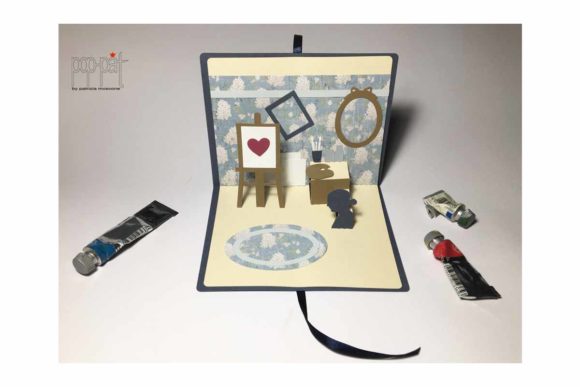
Atelier immediately stands out with its clean, dimensional aesthetic. It's not overly ornate, but it carries a quiet elegance that feels intentional—like a well-thought-out accent in a minimalist space. The 3D effect is subtle but effective, giving the shape depth without crowding the fabric. As a designer who often balances visual impact with wearability, I appreciate how Atelier doesn’t shout for attention, but still makes a statement.
This isn’t a design that demands a spotlight. Instead, it quietly elevates the product it's stitched onto. It reminds me of a modernist pendant or a sculptural detail on a boutique tote—something that looks like it belongs in a curated handmade collection.
Real-Life Use: Where Atelier Shines
I recently tested Atelier on a custom embroidered tote bag project. The shape worked beautifully as a central motif—no additional embellishment needed. It held its form well on medium-weight canvas and added a tactile element that made the bag feel more premium. Customers responded positively, commenting on how "unique" and "modern" it looked in person.
For a small craft business or Etsy seller, this design could easily become a go-to staple. It’s versatile enough to be used on a range of products: from baby onesies (scaled down slightly), to embroidered patches, to boutique sweatshirts. I also tried it on a linen pillow cover and was pleased with how it added just the right amount of dimension without looking bulky.
Performance Across Fabrics and Garments
- Custom Apparel: Works well on cotton tees and heavier sweatshirts. The 3D elements don’t distort with the stretch of the fabric if proper stabilizer is used.
- Textured Fabrics: Performs best on smoother weaves. On highly textured or nubby fabrics, the 3D elements can get lost or feel uneven.
- Dark Fabrics: Holds up nicely—especially if you use contrasting thread or a light-colored applique base.
- Curved Surfaces (like caps): Be cautious here. The flat base of the design can cause slight puckering if not adjusted for the cap’s curve.
I also tested it on a stretchy knit for a personalized baby bodysuit. The stitch density was sufficient to maintain shape, but I added a lightweight tear-away stabilizer to prevent distortion. The result was clean and professional, even after washing.
Where to Use Atelier with Care
While Atelier is versatile, it does have some limitations. It’s not ideal for very small hoop sizes—those under 4x4 inches—since the 3D layers lose definition when scaled down. I tried it on a tiny embroidered patch for a jewelry pouch, and while the shape was still visible, the dimensionality was compromised.
Also, be mindful of intricate corners and edges. If you're stitching on a stretchy or loosely woven fabric, those fine details can pull or fray slightly. I recommend testing on a similar fabric scrap first and possibly adjusting stitch density in those areas.
Design Impact: Elevating Your Finished Product
What I like most about Atelier is how it enhances the perceived value of a finished item. A simple tote bag becomes a statement piece. A basic sweatshirt gets a sculptural upgrade. It adds that handmade touch without looking too casual—perfect for sellers who want to position their items as boutique-level.
From a branding perspective, this design can help maintain consistency across product lines. Whether you're using it on a patch, a personalized gift, or a digital mockup for a client, Atelier reads as intentional and cohesive. It’s the kind of design that makes customers feel like they’re buying something designed with care.
Designer Notes: Practical Tips for Using Atelier
- Test on scrap fabric: Especially if you're using a new stabilizer or unfamiliar fabric.
- Check thread contrast: The 3D layers show up best with contrasting thread colors.
- Review stitch density: Adjust if needed for thinner or stretchier fabrics.
- Confirm hoop size: Don’t force it into a smaller hoop—this design needs space to breathe.
- Inspect small details: Corners and edges can be delicate, especially at reduced sizes.
- Mock it up: Try black and white versions to see how the shape reads without color.
- Compare fabric backgrounds: It looks different on light vs. dark—test both.
- Use the right stabilizer: A medium-weight cutaway works best for consistent results.
- Clarify licensing: Always check if the file allows for commercial use before selling finished items or digital products.
Final Thoughts: A Shape Worth Stitching
Atelier is a well-executed 3D SVG shape that adds depth and interest without being overwhelming. It’s a strong choice for embroidery designers, small business owners, and Etsy sellers who want to elevate their handmade or personalized products. It works best on smooth, stable fabrics and shines brightest when used thoughtfully in a cohesive design.
Whether you're creating custom apparel, embroidered patches, boutique totes, or printable mockups, Atelier is a design that earns its place in your digital embroidery library. Just remember to test it thoroughly before production, and always match it to the right fabric and project type.